
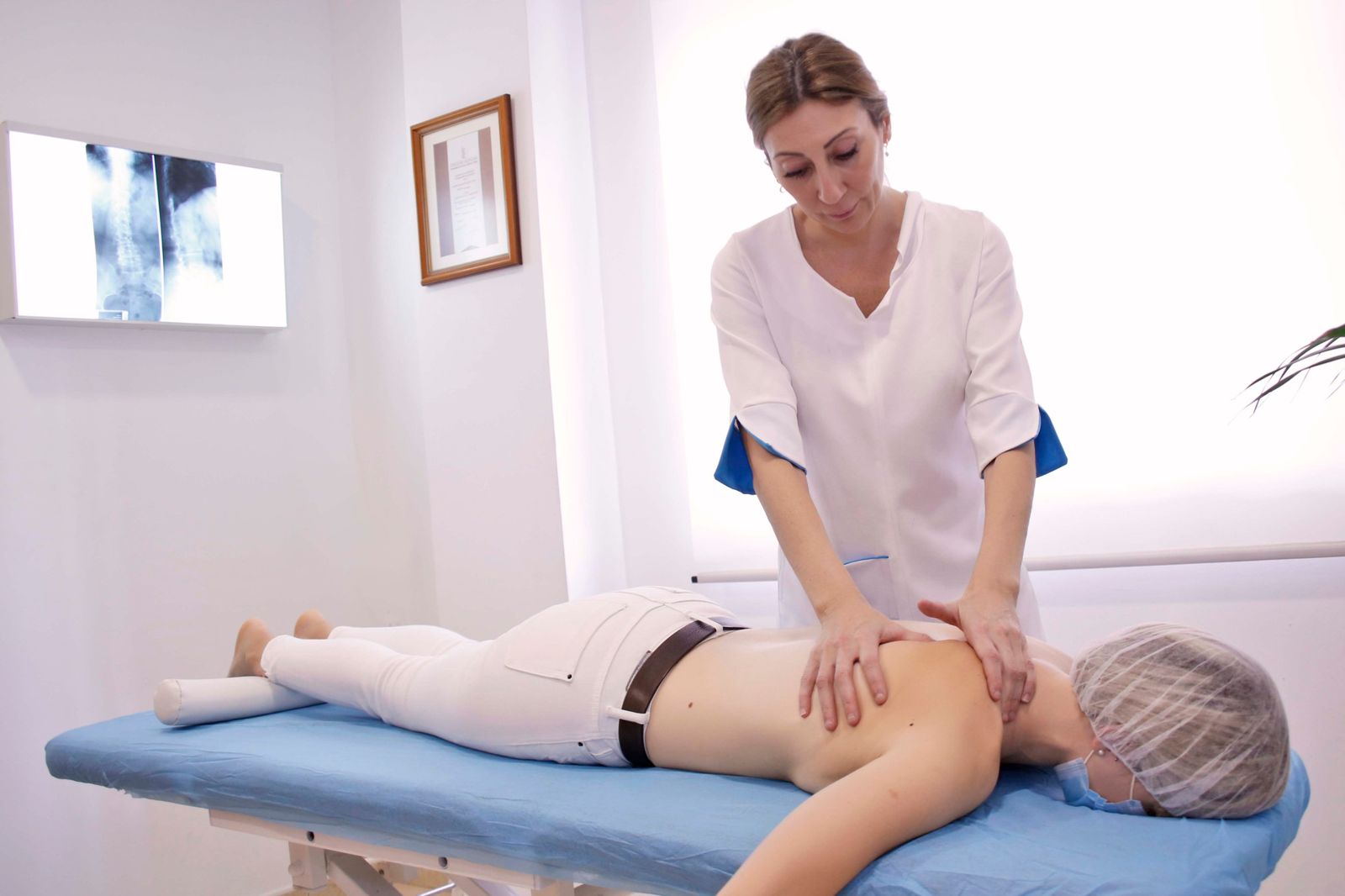
Sports and back physiotherapy
We offer dry needling, a very effective technique for treating myofascial pain, specifically myofascial trigger points (MTrPs). It uses a sterile acupuncture needle to inhibit the motor end plate, immediately reducing the patient’s pain and producing a reflex muscle relaxation with greater muscle elasticity. It is used for muscle problems, tendinosis, tendinitis, frozen shoulder…
Sports physiotherapy is a specialty for people who play sport regularly, whether at a basic, amateur, elite or health-and-fitness level.
The sports physiotherapist’s role is to apply treatment using physical agents (electrotherapy, thermotherapy, manual therapy, hydrotherapy) and therapeutic exercise with different specialist techniques, aimed at the recovery and return to sport of the injured patient. They must have anatomical, physiological and pathomechanical knowledge of sports injuries and, based on a medical diagnosis (usually from an orthopaedic specialist), establish the right protocol and treatment, with therapeutic exercises and routines tailored to each case.
Our top priority is injury prevention, with a personalised protocol and specific pre-competition and immediate post-competition treatment.
The sports physiotherapist must restore the athlete’s function as quickly as possible, speeding up the biological healing processes, limiting their training as little as possible and making sure they return with the best chance of success.
Our goals
- Prevention. Avoid, as far as possible, the factors that can cause injuries from sport in general and from each specific sport, associated injuries, after-effects of the primary injury and possible relapses.
- Recovery. Treat the injuries, any associated injuries and any recurrences, helping the athlete return to their sport as quickly as possible.
- Return to sport. After the recovery phase, make sure the athlete starts training again in the best physical condition, as close as possible to how they were before the injury.
Most common treatments
- Tendinitis and tendinosis (patellar, infraspinatus…) and other tendinopathies.
- Muscle injuries: fibre tears, strains, contractures, overload, bruising.
- Meniscus injuries.
- Osteitis pubis.
- Shoulder rotator cuff injuries.
- Capsule and ligament injuries (sprains, ligament strains, joint dislocations and subluxations).
- Joint instability.
- Functional taping (neuromuscular or kinesio taping).
- Recovery massage.
- Post-operative recovery after knee ligament or tendon reconstruction, or shoulder tendon reattachment.
- Sports massage (pre- and post-competition).
- Return-to-exercise training.
- Techniques to improve sports performance (eccentric training, proprioception…).
- Musculoskeletal and postural assessment of the athlete.
Book an appointment
We will get back to you as soon as possible by phone or email.